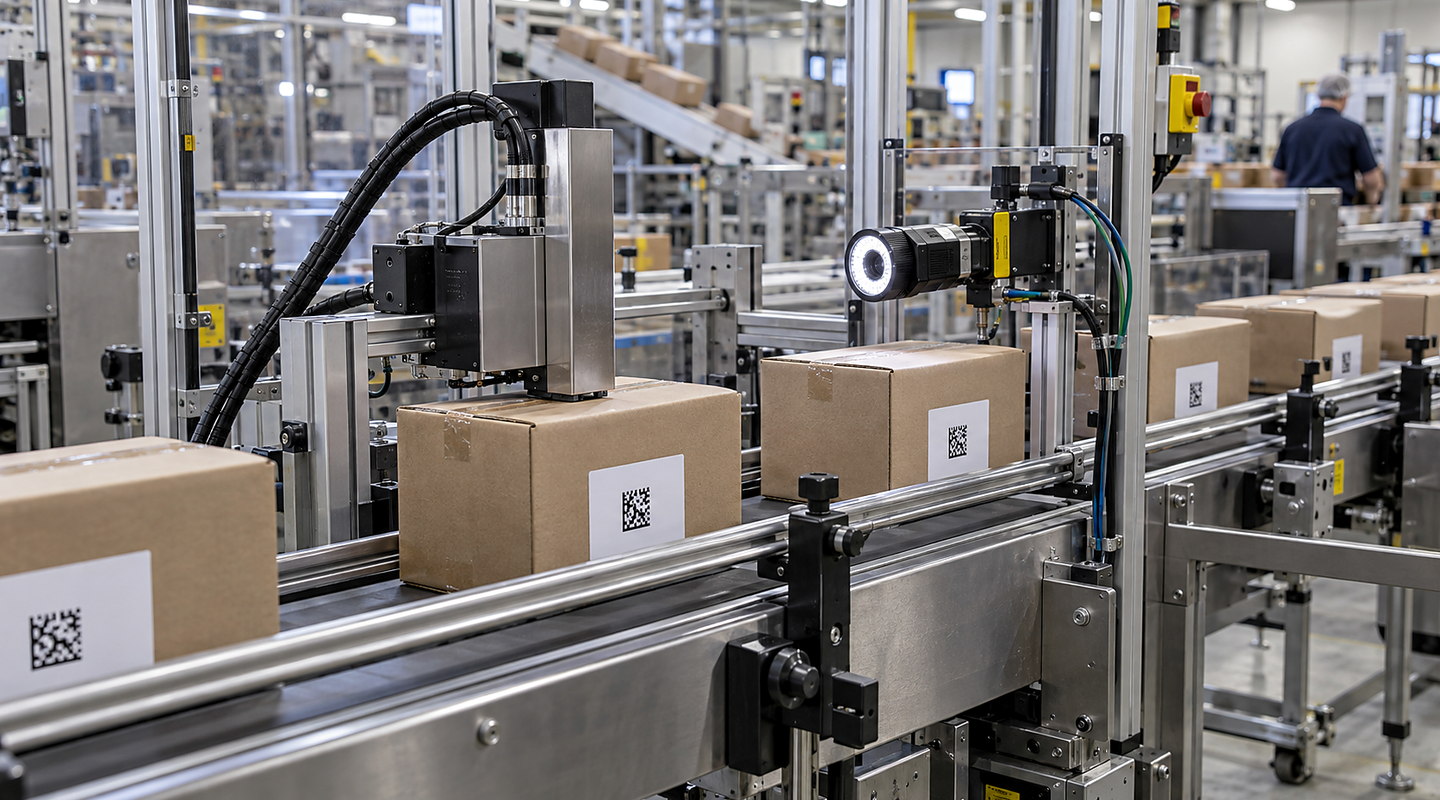
Tyre Identification Selection Guide
Choose tyre identification by comparing your parts, process, rate, access, data needs and required results.
Compare identification approaches against the required identity lifetime, actual tyre substrate, read points and data workflow. Ask each option to demonstrate both usable identifiers and correctly reconciled records under the agreed conditions; preserve separate decisions about the method and the data it carries. Review the specification checklist.
For production identification using tyre identification and traceability, a short trial that reproduces the difficult condition is often more useful than a long list of nominal specifications.
Compare options in the conditions where they must work — Tyre Identification
Plan tyre identification around your identifiers, substrates, production events, system interfaces, exceptions and verification records. Discuss a practical data-flow approach with Oxford Traceability. A useful shortlist should show how every option copes with identifier and data rules for tyre identification & traceability and exception, rework and duplicate handling.
Discuss your application
Ask every supplier the same questions
| Decision | What to ask | What to check |
|---|---|---|
| Identifier and Data Rules for Tyre Identification & Traceability | Does the record follow an individual tyre, a batch or a handling unit, and which source supplies its identity? | Example identifiers, required events, grouping relationships and the agreed owner of corrections. |
| Substrate, Label or Tag Behaviour | Will the proposed method remain usable on actual tyres through the required handling stages? | Representative normal and difficult substrates, expected environment and recorded results for the agreed identification lifetime. |
| Production Speed and Read-Point Conditions | Where is each tyre presented and read, and what normal, difficult and interrupted conditions must the trial represent? | The proposed read points and operating pattern, with usable, unreadable and uncertain results recorded against the actual conditions. |
| Line, Business-System and Network Interfaces | Which device or system starts the event, receives the identifier and confirms that the record is accepted? | The physical and data interfaces, required fields, responsibilities and the agreed response to missing data or interruption. |
| Exception, Rework and Duplicate Handling | What happens to the tyre and its history after an unreadable identifier, repeated record, correction, rework or grouping change? | Expected decisions, correction authority, retained history and a record of the recovery and reconciliation checks. |
| Verification, Retention and Reconciliation Evidence | How will you distinguish identifier usability from correct data and a reconciled event history? | Agreed trial cases, repetitions and acceptance limits, unresolved discrepancies and the responsible organisation's retention rules. |
Include simpler approaches to tyre identification and traceability in your shortlist
| Approach | Often suitable when | Watch for |
|---|---|---|
| Tyre Identification | You need a dedicated solution for a clearly defined duty, product or part range and line interface. | Mark, label, tag and reader performance depends on the real substrate and environment. |
| Label-Based Identification where Direct Marking Is Unsuitable | Direct marking is unsuitable for the required substrate or identification task. | Trial the label on actual tyres under the expected conditions and check that the identifier remains usable through the agreed handling process. |
| Direct-Part Marking where Lifecycle and Substrate Justify It | The substrate and required identification lifetime justify marking the tyre directly. | Trial the proposed method on representative tyres and verify the encoded data and its records as well as readability. |
Pause before choosing when…
- Only perfect or hand-selected examples of production identification using tyre identification and traceability are available.
- No one has defined how verification, retention and reconciliation evidence will be evaluated.
- The normal range for identifier and data rules for tyre identification & traceability is described only as “usually fine” but has not been bounded.
- Your operator, cleaning, maintenance or recovery access has not been considered.
- Quoted performance depends on another machine or data source that is not included.